Armed vs Unarmed Security: Choosing the Right Type in Los Angeles
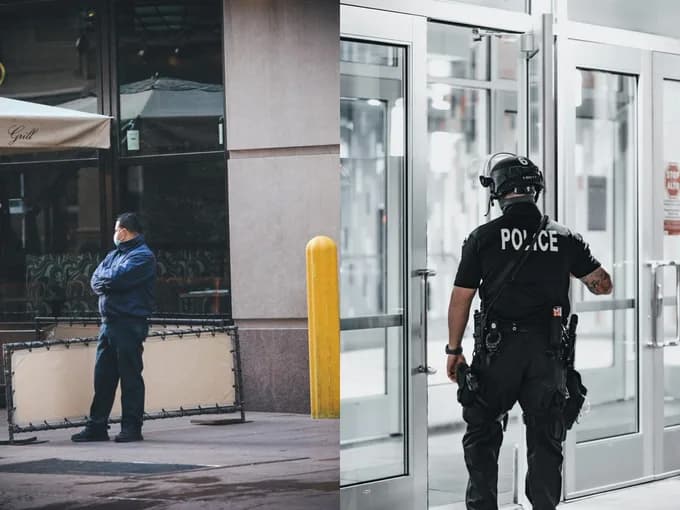
Armed vs. Unarmed Security Guards: Which Does Your Business Actually Need?
Summary
In the high-stakes environment of Los Angeles property and business management, "security" is a broad term that covers a wide spectrum of risk. One of the most critical decisions an owner or manager will face is whether to deploy armed or unarmed personnel. This choice isn't just about the hourly rate; it’s a complex calculation involving liability, brand image, and legal compliance.
As you look to hire security guards, understanding the strategic "why" behind each option is the key to protecting your bottom line and your people.
The Los Angeles Security Landscape: A Professional Assessment
Los Angeles is a city of distinct neighborhoods, each with its own crime profile and security requirements. A luxury boutique in Beverly Hills has vastly different needs than a cannabis distribution center in the San Fernando Valley or a commercial office building in Downtown LA.
At Dispatchify, we specialize in connecting businesses with vetted 24/7 security guard services that match their specific risk profiles. The first step in any engagement is a comprehensive security assessment to determine if the deterrent of a firearm is a necessity or an unnecessary liability.
1. Defining the Roles: Armed vs. Unarmed
To choose the right security type, you must first understand the operational differences.
Unarmed Security Guards
- Primary Function: Observe, report, and provide customer-centric deterrence.
- Tools: Communication devices, flashlights, and sometimes non-lethal deterrents like pepper spray or batons (with specific California permits).
- Best For: Retail environments, residential lobbies, hospitals, and low-to-medium risk corporate offices.
Armed Security Guards
- Primary Function: High-level deterrence and neutralization of imminent, life-threatening danger.
- Tools: Visible firearms (handguns, or occasionally rifles for high-stakes sites), along with the standard gear of an unarmed guard.
- Best For: Banks, jewelry stores, high-value asset transport, cannabis facilities, and high-crime industrial areas.
2. The Financial Logic: Cost vs. Risk
The decision between armed and unarmed security is often a trade-off between higher upfront costs and lower long-term risk (or vice versa).
Hourly Rates and Payroll
In Los Angeles, the cost of labor is a primary driver of your security budget.
- Unarmed Guards: Generally range from $30 to $37 per hour.
- Armed Guards: Typically command a 30% to 50% premium, with rates ranging from $55 to $95+ per hour depending on the threat level.
The Insurance "Surcharge"
Insurance is the "hidden" cost of armed security. Because the presence of a firearm significantly increases the potential for a high-value liability claim, insurers often charge higher premiums for properties using armed personnel.
- Liability Exposure: If an armed guard uses their weapon, the property owner can be held liable for injuries or deaths occurring on-site.
- Premium Hikes: Some security firms have reported insurance costs nearly doubling when adding armed guards to their roster.
Decision Point: If your security assessment reveals a low likelihood of violent crime, the extra $20+/hour and increased insurance costs of armed guards may be a "negative ROI" investment.
3. Risk Assessment Checklist: Armed or Unarmed?
Use this framework to evaluate your property's specific needs.
| Question | If Yes... | Security Recommendation |
|---|---|---|
| Do you handle large amounts of cash or high-value physical assets (jewelry, pharmaceuticals)? | Yes | Armed Security |
| Is your property located in a "hot zone" for violent crime or aggravated assault? | Yes | Armed Security |
| Is your primary goal access control, guest assistance, and "eyes and ears" monitoring? | Yes | Unarmed Security |
| Does your brand prioritize a "welcoming" and "non-intimidating" customer experience? | Yes | Unarmed Security |
| Are you protecting high-profile executives or celebrities? | Yes | Armed Security |
4. Legal and Licensing: The California Standard
In California, the Bureau of Security and Investigative Services (BSIS) enforces strict regulations on who can carry a firearm while on duty.
- Guard Card: All guards—armed and unarmed—must complete an initial 8-hour training course to receive their BSIS registration.
- Firearms Permit: Armed guards must undergo an additional 14-hour course (8 hours of classroom, 6 hours of range time), pass a psychological assessment, and complete ongoing quarterly range qualifications.
- Power to Arrest: Guards in California have the same arrest powers as a private citizen; they cannot legally detain someone in the same way a police officer can.
The Dispatchify Advantage: As a security guard company marketplace, we ensure every provider on our platform is fully compliant with BSIS licensing, keeping your business on the right side of California law.
5. Industry-Specific Case Studies
Case Study A: The Retail Center (Unarmed + Technology)
A Los Angeles shopping center switched from a high-cost armed detail to a hybrid model using unarmed security guards paired with AI-powered video monitoring.
- Result: They reduced their annual security spend by $72,000 while documented incidents dropped by 40% due to better overall site coverage.
Case Study B: The High-Value Logistics Hub (Armed)
A logistics facility handling luxury electronics in an industrial part of LA faced multiple overnight smash-and-grab attempts.
- Result: By deploying 24/7 security guard services with armed personnel at the primary gates, they created a hard-target deterrent that ended the theft attempts immediately.
6. Balancing Safety and Brand Perception
One of the most overlooked factors in choosing a security type is the psychological impact on your stakeholders.
- The "Intimidation Factor": For some customers, seeing an armed guard can make them feel less safe, as it signals the area may be inherently dangerous.
- The "Hospitality First" Approach: Unarmed guards often double as "brand ambassadors" or concierges, providing a friendly face for visitors while maintaining a vigilant presence.
Conclusion: Which Does Your Business Actually Need?
For the majority of Los Angeles businesses—including residential complexes, general retail, and office buildings—unarmed security provides the most cost-effective and low-liability solution. However, for those operating in high-threat environments or managing irreplaceable assets, the deterrence premium of armed security is a necessary operational cost.
Don't leave your safety to chance.
A proper security plan starts with a professional evaluation. Contact Dispatchify today for a Free Security Assessment Consultation and let us help you find the right guard type for your unique Los Angeles property.
For detailed information on the specific licensing and psychological assessment requirements for armed guards in California, visit the Bureau of Security and Investigative Services (BSIS).